Last updated: February 2026
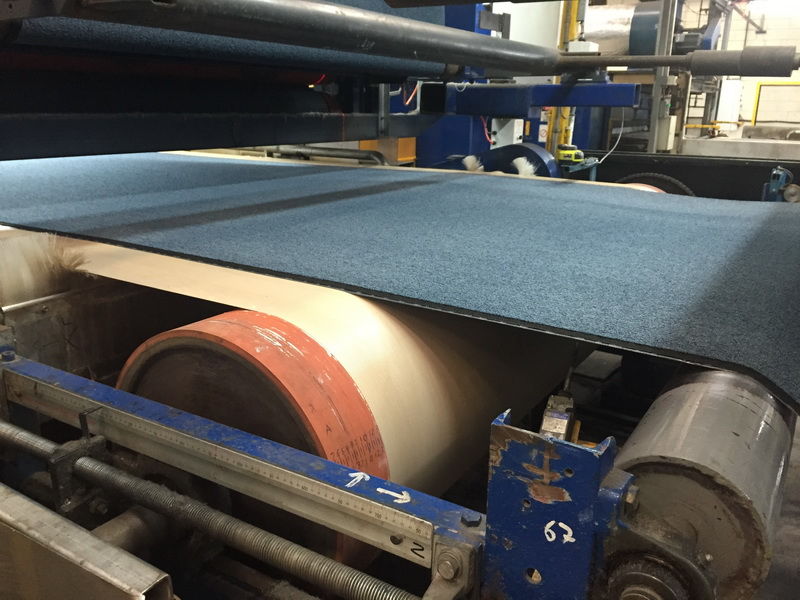
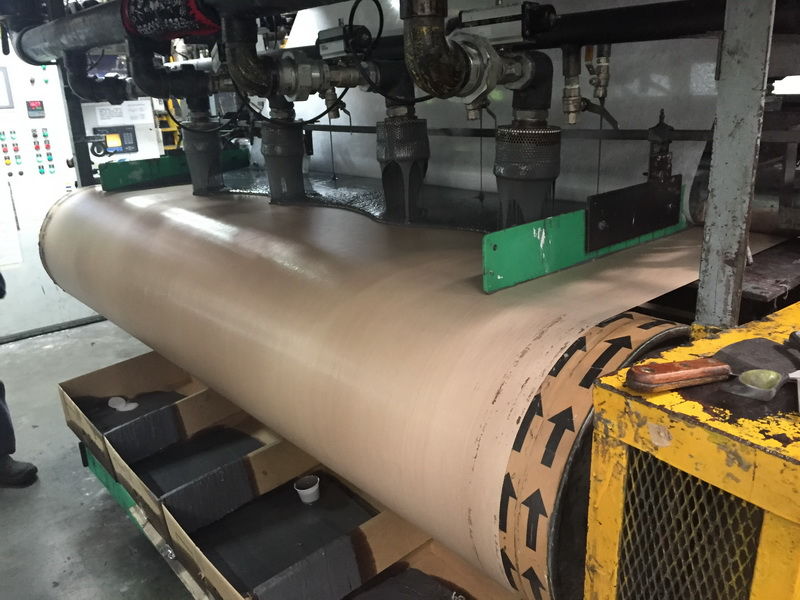
GORTEF has developed specially formulated fluoropolymer coatings applied to a wide range of woven fiberglass products, built for the carpet, rubber and foam industries. Our advanced coating technology creates fabrics with superior release properties and exceptional longevity, outperforming similar products available in the market.
Tell us the process and belt dimensions and we will quote the right coated fabric.
Versatile Applications
Our heavy-duty belting solutions are ideal for:
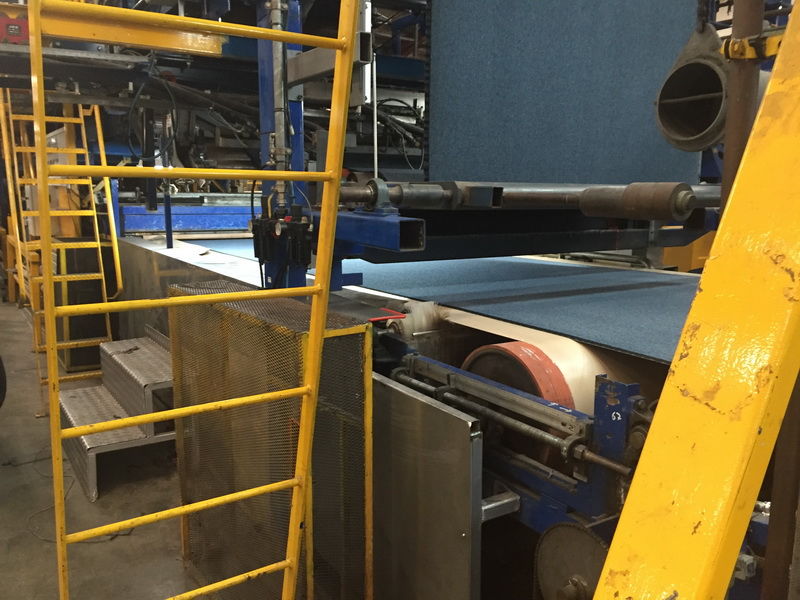
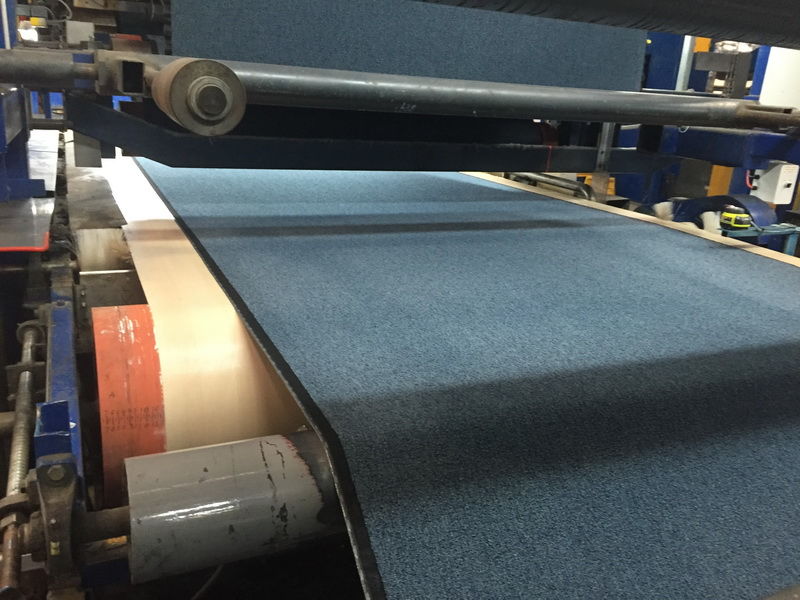
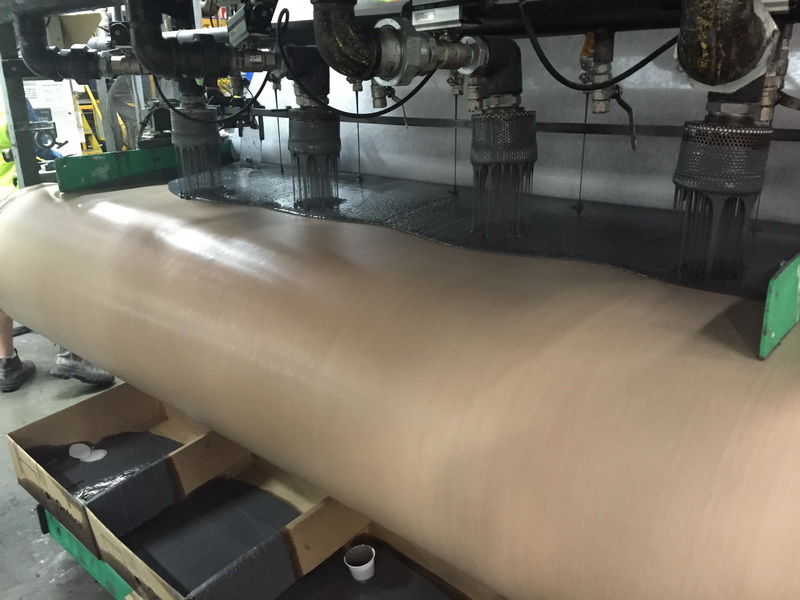
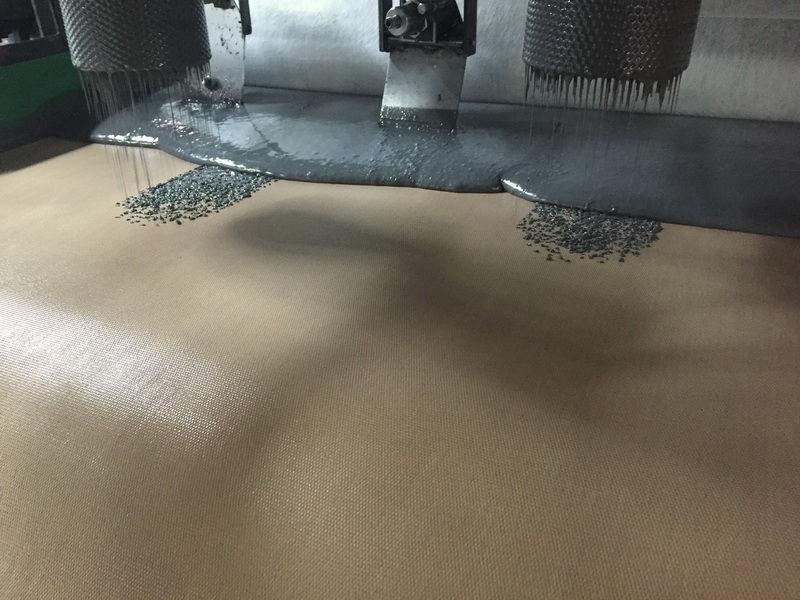
- Conveyor belting for PVC-backed carpets
- Release sheets for door mat production
- Industrial baking processes
- Rubber curing and vulcanising lines
- Rubber extrusion take-off, cooling and conveying
- Foam lamination, bonding and conversion lines
Different structural weaving patterns in our fabrics offer various impression types, allowing customization for specific manufacturing requirements.
PTFE Belting for Rubber and Foam Manufacturing
Uncured rubber is deliberately tacky, and shear heating in an extruder pushes the profile out at 80 to 120°C, which raises that tack further. A profile also has no structural integrity until it is cured, so it has to be carried on a flat, continuous surface from the die all the way through vulcanisation without sticking or stretching. That is the job a coated fabric belt does, and it is why dusting the profile with stearate or talc is worth avoiding: the anti-tack contaminates the surface ahead of flocking, adhesive and paint.
GORTEF 03802 is rated −150°C to +260°C continuous, which covers hot-air vulcanising tunnels running at 150 to 300°C, and the glass substrate holds its dimensions under tension over a long oven rather than creeping. Standard widths to 3300 mm are slit down to the narrow belts these lines actually run.
Why PTFE on a microwave curing stage
Profile lines increasingly cure with a UHF microwave stage at 2,450 MHz before the hot-air tunnel. The belt sits directly in that field, so it has to be transparent to microwave energy or it heats, wastes power and burns out. PTFE has a dielectric constant of roughly 2.0 to 2.1 and a loss tangent near 0.0003, which is about as close to microwave-invisible as a solid gets, and it stays flat across the band. The rubber compound is carbon-black loaded to absorb exactly that energy, so the belt has to behave as the opposite of the product it carries. Open-mesh PTFE coated glass is the standard answer here, and the same reasoning applies to infrared and UV curing tunnels.
PTFE or silicone on the main oven belt?
Worth being straight about: silicone coated belts are more common than PTFE on the main vulcanising oven belt, because PTFE’s surface can be too slick and the profile creeps on it. PTFE wins on microwave curing stages, in salt bath and solvent contact, where an open mesh has to pass hot air, and for every release sheet around the line. Temperature does not decide it: both coatings run to the same 260°C continuous on a glass substrate. We coat fabric both ways, and PTFE vs silicone coated belts compared goes through the choice stage by stage.
For press platens, splice stations, corner moulding and green stock benches, a PTFE film tape for mould release or a non-adhesive Teflon sheet is usually the right part rather than a belt.
Frequently Asked Questions
PTFE heavy duty belting is used for conveyor belting in PVC-backed carpet manufacturing, release sheets for door mat production, industrial baking processes, and rubber curing applications. The fluoropolymer coating provides superior release properties for demanding industrial environments.
GORTEF heavy duty PTFE belting has a thickness of 0.70mm with a weight of 1100 g/m² and 44% PTFE content. The belting is available in standard widths of 2000mm, 2600mm, and 3300mm.
Yes, heavy duty PTFE belts can be manufactured to custom dimensions. Different structural weaving patterns are also available to produce various surface impressions suited to specific manufacturing requirements.
A coated fabric belt carries the profile from the extruder die through cure, because uncured rubber is tacky and has no structural integrity until it is vulcanised. PTFE coated glass is used on microwave curing stages, in hot-air tunnels where an open mesh has to pass air, and in salt bath zones. Silicone coated fabric is common on the main oven belt where grip or surface texture is wanted. GORTEF supplies both.
A UHF curing stage runs at 2,450 MHz and the belt sits in the field, so it must be transparent to microwave energy or it heats up and fails. PTFE has a dielectric constant of about 2.0 to 2.1 and a loss tangent near 0.0003, so it passes the energy through to the carbon-black loaded rubber that is meant to absorb it.
