Last updated: February 2026
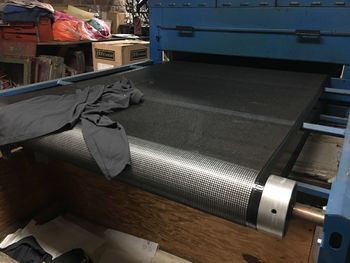
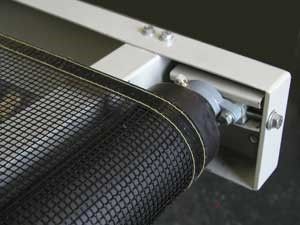
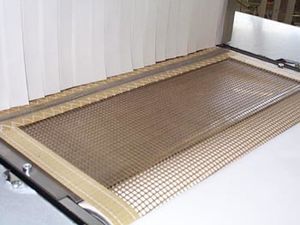
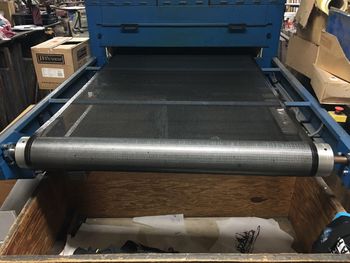
PTFE coated mesh belts are open-weave conveyor belts designed for industrial drying ovens where airflow and moisture removal are critical. The open mesh structure allows heated air to pass directly through the belt and product, significantly improving drying efficiency compared to solid belts. GORTEF supplies mesh belts in fiberglass, Kevlar (aramid), and Nomex substrates, with widths up to 5000mm and mesh apertures from 1mm to 8mm.
Tell us your belt dimensions and mesh opening and we will quote the right specification.
Overview
GORTEF offers a comprehensive range of dryer belts suitable for various ovens and curing units. Our PTFE coated mesh belts are engineered for optimal performance and durability across different industrial applications.
Material Variations
Our PTFE coated open mesh materials come in three main substrate options:
- Fiberglass (Most common)
- Aramid (Kevlar)
- Nomex (Specialized applications)
Mesh Specifications
The mesh size or aperture ranges from 1mm to 8mm square, with 4mm being the most common configuration. Our belts feature various weave styles, predominantly using:
- Tightly wound weft threads
- Lino weave warp threads
- Double weft versions for enhanced dimensional stability
What Are Mesh Belts Used For?
A mesh belt is used wherever products need to be conveyed through a heated environment while allowing air, steam, or moisture to pass through the belt surface. The open weave structure of a PTFE coated mesh belt makes it essential for efficient drying, curing, and heat treatment across multiple industries:
- Textile manufacturing: drying yarn, fabric, and garments in continuous drying ovens after dyeing or washing
- Screen printing: conveying printed items through UV curing ovens and infrared dryers
- Food processing: drying, baking, cooling, and freezing applications where airflow through the belt improves efficiency
- Paper and nonwovens: drying paper products, tissue, and nonwoven materials in through-air dryers
- Automotive and composites: curing rubber, fibreglass, and composite components at elevated temperatures
- Electronics: drying and curing coatings on circuit boards and electronic components
Applications and Benefits
PTFE mesh fabrics excel in applications requiring efficient airflow and moisture removal. The open mesh structure facilitates optimal air circulation within drying oven units.
Specialized Solutions
For environments with high moisture levels or direct steam exposure, we recommend PTFE coated Kevlar mesh. While standard glass mesh may deteriorate quickly in these conditions, Kevlar provides superior resilience and longevity.
Wide Format Options
Our PTFE coated mesh fabrics are available in widths up to 5000mm, significantly wider than standard closed weave PTFE fabrics. This expanded width capability enables oven manufacturers to design larger units, facilitating increased throughput and production volumes.
For more detailed information about these materials and their applications, please visit our applications sections covering screen printing belts and textile fabric drying belts.
Frequently Asked Questions
PTFE dryer mesh belts are open-weave conveyor belts coated with PTFE (Teflon) designed for industrial drying applications. The open mesh structure allows air and moisture to pass through freely, making them ideal for use in drying ovens and curing units.
Dryer mesh belts are used in industrial applications that require efficient airflow and moisture removal, including textile drying, screen printing, food processing, and general industrial drying ovens. They are available in widths up to 5000mm to suit large-scale production environments.
PTFE-coated mesh belts offer superior non-stick properties, chemical resistance, and temperature tolerance from -150°C to +260°C compared to uncoated mesh. They are available in fiberglass, Kevlar, and Nomex substrates, with Kevlar recommended for high-moisture or direct steam environments where standard glass mesh would deteriorate quickly.
