Last updated: February 2026
Belt Edge Reinforcement Types
Belt edge reinforcement is crucial for extending the life of the belt, preventing fraying, and ensuring structural integrity. Different materials are used to reinforce belt edges, each providing unique benefits based on the application.
Tell us the belt dimensions and edging type and we will quote it.
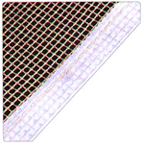
PTFE Film
- A thin, flexible edge reinforcement that enhances chemical and heat resistance
- Ideal for applications requiring non-stick properties
- Provides excellent durability against wear and tear
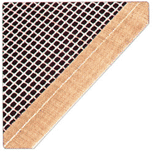
PTFE Glass
- A stronger and more rigid reinforcement compared to PTFE film
- Offers superior dimensional stability and resistance to high temperatures
- Commonly used in conveyor systems handling high heat or abrasive materials
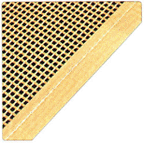
PTFE Kevlar
- A high-strength edge reinforcement offering exceptional durability
- Best suited for heavy-duty applications where high tensile strength is required
- Resistant to extreme temperatures and harsh operating conditions
Belt Tracking Options
Tracking options help maintain proper belt alignment, ensuring efficient operation and preventing misalignment issues.
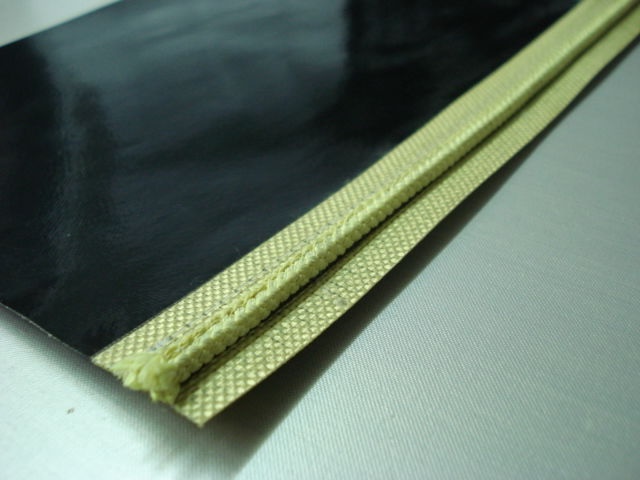
Silicone or Kevlar Tracking Cord
- Silicone tracking cord provides flexibility and slip resistance
- Kevlar tracking cord offers high strength and resistance to wear
- These cords are embedded in the belt's surface to guide and stabilize tracking, reducing the risk of belt deviation
Button Guide
- Button guides are small, evenly spaced protrusions on the belt surface
- They interact with guiding grooves in the conveyor system to ensure accurate belt positioning
- Ideal for applications requiring precise alignment
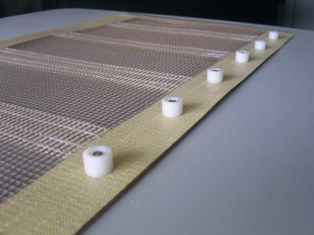
Tracking Eyelets or Studs
- Eyelets or studs are metal or plastic fixtures embedded in the belt
- They help maintain consistent belt tracking, especially in high-speed conveyor systems
- Used in applications where minimal lateral movement is critical
