PTFE Tape for Electrical Insulation
High-temperature PTFE film tape for wire harnesses, transformers, motor windings, and battery pack insulation
Last updated: February 2026
PTFE tape is used as a high-temperature electrical insulation material in applications where conventional insulation (PVC, polyester, polyimide) cannot withstand the operating temperature or chemical environment. With a dielectric strength of approximately 60 kV/mm, continuous service temperature to +260°C, and complete resistance to oils, solvents, and moisture, PTFE film tape provides reliable electrical insulation for wire harness wrapping, transformer coil insulation, motor winding protection, and battery pack barriers.
GORTEF supplies PTFE skived film tapes (TFT series) in thicknesses from 0.085 mm to 0.50 mm with silicone adhesive backing for electrical insulation applications across Australia and New Zealand.
Why Is PTFE Used for Electrical Insulation?
PTFE combines several properties that make it uniquely suited to high-performance electrical insulation:
| Property | PTFE Value | Significance |
|---|---|---|
| Dielectric strength | ~60 kV/mm | High voltage withstand capability in thin layers |
| Temperature range | -73°C to +260°C | Operates where PVC (max ~105°C) and polyester (max ~155°C) fail |
| Dielectric constant | ~2.1 (1 kHz) | One of the lowest of any solid, ideal for high-frequency applications |
| Dissipation factor | <0.0003 | Extremely low dielectric loss, suitable for RF and microwave |
| Moisture absorption | <0.01% | Insulating properties unaffected by humidity or water exposure |
| Chemical resistance | Virtually universal | Unaffected by oils, solvents, acids — see our chemical resistance guide |
| Flammability | Non-flammable (LOI >95%) | Will not burn under normal conditions; self-extinguishing |
Where Is PTFE Tape Used for Electrical Insulation?
Wire Harness Wrapping
PTFE film tape is wrapped around wire harnesses and cable bundles in high-temperature environments such as engine bays, exhaust routing, and industrial ovens. It provides abrasion protection and electrical isolation between conductors at temperatures where PVC tape would melt and shrink-wrap tubing would fail.
Transformer Insulation
PTFE tape is used as interlayer insulation in dry-type transformers and high-frequency inductors. Its low dielectric constant and dissipation factor make it suitable for applications where minimal energy loss is critical. The tape's resistance to transformer oil is an additional benefit in oil-filled designs.
Motor and Coil Winding Insulation
Electric motor windings, solenoid coils, and heating elements use PTFE tape as slot liner insulation and phase-to-phase barriers. In motors operating at Class H (180°C) or Class N (200°C) temperatures, PTFE provides reliable insulation with margin.
Battery Pack Insulation
Lithium-ion battery packs use PTFE tape as a non-flammable barrier between cells and between cell modules. PTFE's non-flammability (LOI >95%) provides an additional safety layer in battery assemblies where thermal runaway is a concern.
Capacitor and Component Wrapping
High-voltage capacitors, resistors, and power electronics components use PTFE tape for outer wrapping and terminal insulation. The tape's high dielectric strength relative to its thickness allows compact insulation in space-constrained assemblies.
Aerospace and Defence Electronics
Military and aerospace applications use PTFE tape for cable insulation in environments combining extreme temperatures, vibration, chemical exposure (fuel, hydraulic fluid), and high reliability requirements.
How Does PTFE Compare to Other Insulation Materials?
| Property | PTFE Film | Kapton (Polyimide) | PVC Tape | Silicone Rubber |
|---|---|---|---|---|
| Max continuous temp | +260°C | +400°C | +105°C | +200°C |
| Chemical resistance | Excellent (universal) | Good (fails with strong alkalis) | Poor (solvents attack) | Good |
| Dielectric constant | 2.1 | 3.4 | 3.4–8.0 | 2.7–3.0 |
| Moisture absorption | <0.01% | ~2.9% | Low | Low |
| Non-flammable | Yes (LOI >95%) | Self-extinguishing | No (burns) | Self-extinguishing |
| Cost | Moderate | High | Very low | Moderate |
When to choose PTFE over Kapton: PTFE is preferred when chemical resistance is a primary concern (Kapton is attacked by strong alkalis), when the lowest possible dielectric constant is needed (RF/microwave applications), or when moisture resistance is critical. Kapton is preferred when temperatures exceed 260°C or when higher tensile strength is required.
When to choose PTFE over PVC: Any application above 80°C, or in contact with oils, solvents, or fuels. PVC tape should only be used for room-temperature, low-voltage general wiring.
Which PTFE Tape Thickness for Electrical Insulation?
| Product | Backing | Best For |
|---|---|---|
| TFT020AD (0.50 mm) | Heavy duty | Coil insulation, transformer interlayer, harness wrapping, motor slot liners, battery pack barriers, high-voltage insulation |
Frequently Asked Questions
PTFE film has a dielectric strength of approximately 60 kV/mm (1500 V/mil). For the TFT020AD tape at 0.50 mm backing thickness, this translates to approximately 30,000 volts breakdown. Multiple wraps increase the voltage rating proportionally.
In many applications, yes. PTFE offers better chemical resistance, lower dielectric constant, and near-zero moisture absorption. However, Kapton can withstand higher temperatures (up to 400°C) and has higher tensile strength. Choose based on whether chemical resistance or extreme temperature is the primary requirement.
Yes. PTFE is non-flammable (LOI >95%), electrically insulating, and resistant to battery electrolytes. It is used as an inter-cell barrier and module wrapper in lithium-ion battery assemblies for electric vehicles and energy storage systems.
Yes. PTFE absorbs less than 0.01% moisture, so its dielectric properties are virtually unchanged in humid or wet environments. This is a significant advantage over polyimide (Kapton), which absorbs approximately 2.9% moisture and can lose insulation performance in humid conditions.
You May Also Be Interested In
GORTEF PTFE Film Tapes for Electrical Insulation
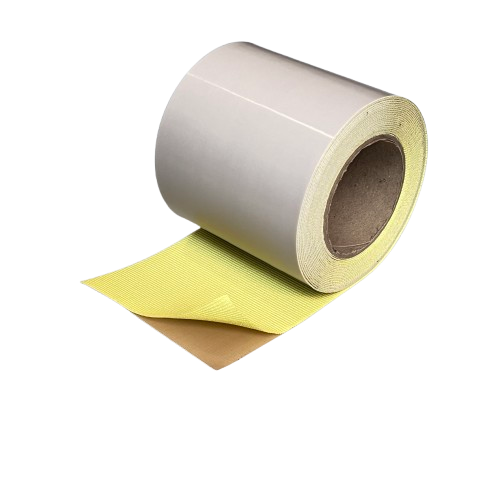
TFT020AD
Why Choose Gortef?
Australian Owned
Supplying teflon tapes, sheets and belts to local Australian and New Zealand companies since 1989
Reliable Quality
Industry-leading PTFE tapes, sheets and belts manufactured to the highest standards, trusted by 600+ small to listed Australian companies
Fully Insured
Peace of mind with comprehensive public and product liability insurance coverage
Local Fast Delivery
Local support and FAST delivery to all Australian states