PTFE Tape for Heat Presses
How to use Teflon tape on heat press platens for sublimation, DTF, HTV, and screen printing transfers
Last updated: February 2026
PTFE tape for heat presses is an adhesive-backed, fiberglass-reinforced Teflon tape applied directly to the upper platen of a heat press machine to create a permanent non-stick surface. It prevents ink, adhesive, and transfer residue from building up on the platen, protects garments from scorching, and ensures even heat distribution across every press cycle. GORTEF supplies industrial-grade PTFE tape in 3, 5, and 10 thou thicknesses suited to all heat press applications.
Whether you run a garment decoration business using sublimation, DTF, HTV, or screen-printed transfers, PTFE tape on your heat press platen reduces cleaning time, extends equipment life, and delivers more consistent results than working with an unprotected surface.
What Is PTFE Tape for Heat Presses?
PTFE tape for heat presses is made from woven glass fibre fabric coated with PTFE (polytetrafluoroethylene) and backed with a high-temperature silicone adhesive. It is not the same product as plumber's Teflon tape, which is a thin uncoated film for sealing pipe threads. Industrial PTFE tape is designed to withstand continuous temperatures from -73°C to +260°C — well above the 150–220°C range used in most heat press applications.
The tape is applied once to the heat press platen and remains in place for weeks or months depending on usage volume. It serves as a permanent non-stick barrier that replaces the need to use a loose PTFE cover sheet for every press cycle, saving time in production environments. For more background on the material itself, see our guide on what is Teflon tape.
Why Does Your Heat Press Need PTFE Tape?
An unprotected heat press platen accumulates ink, adhesive, and transfer residue after every press. Over time this residue transfers back onto garments (ghosting), causes uneven heat distribution, and requires frequent cleaning that slows production. PTFE tape solves these problems:
- Prevents ghosting and contamination — sublimation ink, DTF adhesive, and HTV residue release cleanly from the PTFE surface instead of embedding into the platen
- Protects garments from scorching — the tape creates a buffer between the hot metal platen and the garment, reducing the risk of shine marks on dark fabrics
- Extends platen life — without tape, adhesive buildup requires aggressive cleaning that damages the platen coating over time
- Saves time in production — eliminates the need to position a loose cover sheet before every press, which adds up across hundreds of daily presses
- Ensures even heat distribution — a clean, uniform PTFE surface transfers heat more consistently than a platen with patchy residue buildup
Which Heat Press Applications Use PTFE Tape?
PTFE tape is used across all common heat press transfer methods. The operating temperatures fall well within the tape's rated range of +260°C continuous.
| Transfer Method | Typical Temperature | Typical Time | Why PTFE Tape Helps |
|---|---|---|---|
| Sublimation | 180–205°C | 45–80 sec | Prevents sublimation ink from transferring to platen (ghosting) |
| DTF (Direct-to-Film) | 140–180°C | 10–15 sec | Stops hot-melt adhesive from sticking to upper platen |
| HTV (Heat Transfer Vinyl) | 150–175°C | 10–25 sec | Prevents vinyl carrier sheet residue from building up |
| Screen-Printed Transfers | 163–191°C | 5–7 sec | Protects platen from plastisol ink transfer under heavy pressure |
| Rhinestones / Embellishments | 150–170°C | 10–20 sec | Prevents adhesive from rhinestone backing from fouling the platen |
What Types of Heat Press Use PTFE Tape?
PTFE tape can be applied to the upper platen of any flat heat press. The most common types are:
Clamshell Presses
The upper platen closes downward at an angle. PTFE tape is applied across the full platen surface. This is the most common press type for small to mid-volume garment decoration and the simplest to tape.
Swing-Away Presses
The heat head swings laterally and lowers vertically, providing even pressure without pinch points. The flat upper platen is taped the same way as a clamshell. Swing-away presses are preferred for sublimation and thick substrates.
Drawer / Slide-Out Presses
The lower platen slides out for loading while the upper platen stays fixed. PTFE tape is applied to the stationary upper platen. Useful in production environments where operators load garments away from the heat source.
Shuttle Presses
Two lower platens alternate under a single heat head, doubling throughput. PTFE tape on the upper platen is especially important here because the press runs nearly continuously with minimal downtime for cleaning.
Specialty presses (cap presses, mug presses) use curved platens that are typically factory-coated with PTFE rather than user-applied tape. For flat platens on standard heat presses, adhesive PTFE tape is the preferred method.
PTFE Tape vs PTFE Cover Sheet: Which Should You Use?
Both PTFE tape and PTFE cover sheets (sometimes called Teflon sheets or press pillows) provide non-stick protection, but they serve different purposes:
| Feature | PTFE Adhesive Tape (on platen) | Loose PTFE Cover Sheet |
|---|---|---|
| Attachment | Adhered permanently to upper platen | Placed manually over garment each press |
| Purpose | Protects the platen from residue buildup | Protects the garment from direct platen contact |
| Production speed | No per-press handling needed | Must position and remove each cycle |
| Heat transfer | Minimal heat loss (tape is thin) | Slightly more heat buffering |
| Best for | Production environments, repeat pressing | One-off jobs, sensitive substrates, extra protection |
Many operators use both: PTFE tape on the platen as permanent protection, plus a loose cover sheet when pressing delicate items or when working with transfers that produce significant outgassing. For the tape itself, see our PTFE coated glass fabric tapes or PTFE skived film tapes.
How to Apply PTFE Tape to a Heat Press Platen
Applying PTFE tape to a heat press is straightforward. Follow these steps for a smooth, bubble-free result:
1. Clean the Platen
Ensure the press is off and cool. Remove any old tape. Clean the platen surface thoroughly with isopropyl alcohol to remove all residue, oil, and dust. The adhesive will not bond properly to a dirty surface.
2. Measure and Cut
Measure the platen dimensions and cut the PTFE tape to size, leaving approximately 10–15 mm extra on each edge for trimming. For wide platens, you may need to apply tape in overlapping strips — overlap by at least 5 mm to prevent gaps.
3. Peel and Position
If the tape has a release liner, peel back approximately 50 mm from one end. Align the exposed adhesive edge with one side of the platen and press firmly into place.
4. Apply with a Roller
Gradually peel the liner while pressing the tape onto the platen using a smooth roller or flat tool. Work from one side to the other to push out air bubbles. Apply firm, even pressure — avoid stretching the tape.
5. Trim the Edges
Once fully applied, trim any overhang with a sharp blade. Ensure all edges are firmly adhered to prevent lifting during use.
6. Heat Cure (Optional)
Close the press at normal operating temperature for 30–60 seconds. This activates the silicone adhesive for maximum bond strength and ensures the tape conforms fully to the platen surface.
What Thickness of PTFE Tape Should You Use?
PTFE tape for heat presses is available in three standard thicknesses. The right choice depends on your balance between heat transfer efficiency and tape durability:
| Thickness | GORTEF Product | Heat Transfer | Durability | Best For |
|---|---|---|---|---|
| 3 thou (0.075 mm) | TCG003AD | Excellent | Good | Sublimation, DTF — where maximum heat transfer matters |
| 5 thou (0.130 mm) | TCG005AD | Very good | Very good | General purpose — best all-round choice for most heat press work |
| 10 thou (0.250 mm) | TCG010AD | Good | Excellent | High-volume production — longest life between replacements |
For most garment decorators, 5 thou (TCG005AD) is the recommended starting point. It offers the best balance of heat conductivity and wear resistance. If you find your tape wearing out too quickly under high production volumes, step up to 10 thou. If you need maximum heat transfer for sublimation on polyester, try 3 thou.
When Should You Replace PTFE Tape on a Heat Press?
PTFE tape does not last forever. Inspect your platen tape regularly and replace it when you notice any of these signs:
- Discolouration or yellowing — brown or yellow patches indicate the PTFE coating has degraded from prolonged heat exposure
- Edge lifting or peeling — if tape corners or edges are lifting, residue can get underneath and contaminate transfers
- Visible wear-through — if the glass fibre weave is visible through the PTFE coating, the non-stick surface is compromised
- Ink or adhesive sticking to the tape — when transfers start sticking where they didn't before, the tape's non-stick properties have worn out
- Inconsistent transfer quality — uneven colour, patchy transfers, or hot spots suggest the tape is no longer distributing heat evenly
Replacement frequency depends on usage. Light-use shops (a few presses per day) may go several months. High-volume operations pressing hundreds of garments daily should inspect weekly and expect to replace tape every 2–6 weeks. For more detail, see our guide on how often to change PTFE tape.
Frequently Asked Questions
Yes. PTFE tape applied to the upper platen provides permanent non-stick protection and eliminates the need to place and remove a loose cover sheet for every press. Many operators use tape on the platen for efficiency and keep a loose sheet for occasional use on delicate items.
Industrial PTFE coated glass fabric tape is rated for continuous use from -73°C to +260°C. All standard heat press applications (sublimation, DTF, HTV, screen transfers) operate between 140–220°C, well within the tape's safe operating range.
Minimally. PTFE tape at 3 or 5 thou thickness has very little insulating effect. You may need to increase temperature by 2–5°C or add 1–2 seconds of press time to compensate, but in practice most operators see no difference in transfer quality.
Warm the press slightly (around 80–100°C) to soften the adhesive. Peel the tape from one corner, pulling slowly at a low angle. Remove any remaining adhesive residue with isopropyl alcohol or a citrus-based adhesive remover before applying new tape.
PTFE is FDA-compliant for food contact applications. However, the tape is applied to the press platen, not the product itself. For mug and tumbler presses, the PTFE surface touches the outside of the vessel, not the food-contact interior, so this is not a concern.
You May Also Be Interested In
GORTEF PTFE Tapes for Heat Presses
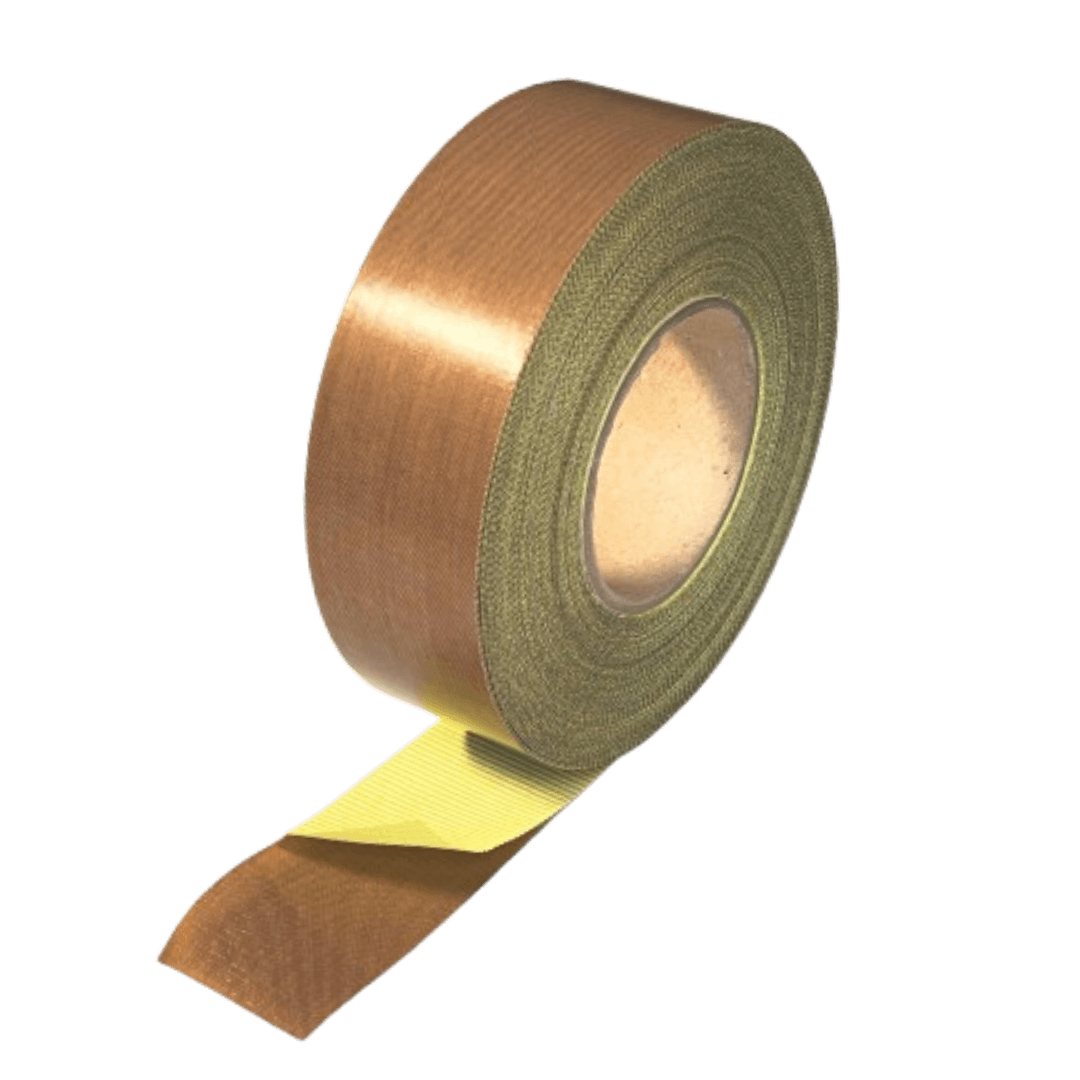
TCG003AD
TCG005AD
TCG010AD
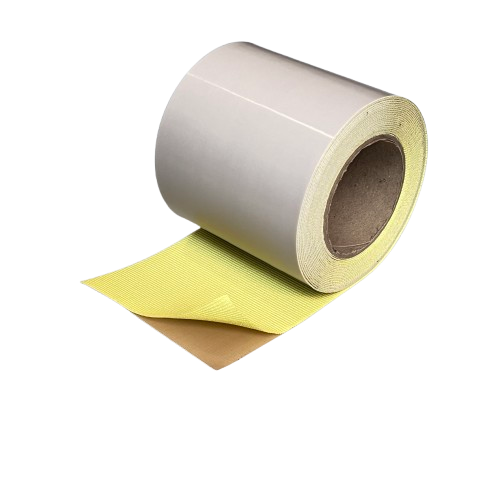
TFT020AD
Why Choose Gortef?
Australian Owned
Supplying teflon tapes, sheets and belts to local Australian and New Zealand companies since 1989
Reliable Quality
Industry-leading PTFE tapes, sheets and belts manufactured to the highest standards, trusted by 600+ small to listed Australian companies
Fully Insured
Peace of mind with comprehensive public and product liability insurance coverage
Local Fast Delivery
Local support and FAST delivery to all Australian states