Heat Seal Tape for Food Packaging
How PTFE tape is used on food packaging machines, food safety compliance, and choosing the right tape for your operation
Last updated: March 2026
Heat seal tape for food packaging is a PTFE (Teflon) coated glass fabric tape applied to the sealing jaws of packaging machines to prevent plastic film from sticking to heated surfaces during the sealing process. It is the most critical consumable on any heat sealing line — without it, packaging film adheres to the jaw, seals fail, and production stops. PTFE heat seal tape is FDA-compliant for food contact (21 CFR 177.1550), withstands continuous temperatures up to +260°C, and is used on impulse sealers, L-bar sealers, flow wrappers, form-fill-seal machines, and band sealers across every sector of food packaging.
GORTEF supplies PTFE heat seal tape to food packaging operations across Australia and New Zealand. Based on our experience supplying 500+ food packaging and manufacturing lines, this guide covers tape selection, food safety compliance, machine-specific recommendations, and maintenance best practices.
Why Does Food Packaging Need PTFE Heat Seal Tape?
Every heat-sealed food package — from a bag of chips to a vacuum-sealed meat tray — passes through a sealing jaw that reaches 150–250°C. At these temperatures, polyethylene, polypropylene, and other packaging films melt at the seal point. Without a non-stick barrier on the jaw surface, the molten film bonds to the metal jaw instead of to itself, causing:
- Failed seals — film tears or sticks to the jaw, producing open or weak packages that compromise food safety
- Production downtime — operators must stop the line to clean film residue off the jaw, losing hundreds of packs per hour
- Contamination risk — burnt film residue on the jaw can transfer to subsequent packages, introducing foreign material
- Uneven seals — residue buildup creates hot spots and cold spots on the jaw, producing inconsistent seal quality
PTFE tape eliminates these problems. Its surface energy is so low (approximately 18–20 dynes/cm) that molten plastic releases cleanly from the jaw after every seal cycle. The tape also distributes heat evenly across the jaw surface, producing consistent seal strength pack after pack.
Which Food Packaging Machines Use PTFE Heat Seal Tape?
PTFE tape is used on virtually every type of heat sealing equipment in food packaging. The table below shows the most common machine types and how tape is applied on each:
| Machine Type | Where Tape Goes | Recommended Tape | Typical Replacement |
|---|---|---|---|
| Impulse sealer | Upper and lower jaw pads | TCG003AD or TCG005AD | Every 1–3 weeks |
| L-bar sealer | L-shaped sealing wire cover | TCG005AD (zone tape TZT005AD for wire area) | Every 2–4 weeks |
| Flow wrapper (HFFS) | Cross-seal jaws, fin-seal bar | TCG003AD or TCG005AD | Every 1–2 weeks (high cycle rate) |
| Vertical form-fill-seal (VFFS) | Cross-seal jaws, back-seal bar | TCG005AD | Every 1–3 weeks |
| Tray sealer (MAP) | Sealing plate / die surface | TCG005AD or TCG010AD | Every 2–6 weeks |
| Band sealer (continuous) | PTFE belt replaces tape | Heat sealing belts | Every 2–6 months |
| Vacuum chamber sealer | Seal bar pad | TCG005AD | Every 2–4 weeks |
For detailed guidance on all packaging machine types, see our packaging industry applications page.
Food Safety Compliance for PTFE Heat Seal Tape
Any material that contacts food or food packaging in Australia must comply with Food Standards Australia New Zealand (FSANZ) requirements. PTFE heat seal tape used in food packaging must meet the following standards:
FDA 21 CFR 177.1550
The internationally recognised standard for PTFE in food contact applications. All GORTEF PTFE tapes meet this regulation, which permits PTFE resins for repeated food contact at temperatures up to +260°C. FSANZ references FDA-approved materials as compliant for use in Australia and New Zealand.
HACCP Compatibility
PTFE tape is a consumable that degrades over time. Under HACCP principles, food manufacturers must include tape replacement in their preventive maintenance schedules and monitor for tape fragments in the packaging zone. If tape pieces can fall into the product stream, metal detectable PTFE tape should be used so fragments are caught by in-line metal detectors.
Metal Detectable PTFE Tape
For food manufacturers with in-line metal detection (required under most HACCP and BRC/SQF food safety plans), metal detectable PTFE tape contains embedded metal particles that trigger metal detectors if tape fragments break off and enter the product. This is standard practice in meat, dairy, bakery, and snack food manufacturing.
How to Choose PTFE Heat Seal Tape for Food Packaging
Selecting the right tape for your food packaging operation depends on three factors: machine type, packaging film, and food safety requirements.
Thickness Selection
| Thickness | Product | Best For | Trade-off |
|---|---|---|---|
| 3 thou (0.075 mm) | TCG003AD | Impulse sealers, flow wrappers — where heat transfer speed matters | Faster heat transfer but shorter life |
| 5 thou (0.130 mm) | TCG005AD | General-purpose — works on most packaging machines | Best balance of heat transfer and durability |
| 10 thou (0.250 mm) | TCG010AD | Tray sealers, high-pressure applications — longest service life | Most durable but slightly slower heat transfer |
Standard Tape vs Zone Tape
On some sealing machines (particularly L-bar sealers and impulse sealers with exposed heating elements), standard PTFE tape can leave a visible mark on the packaging where the adhesive is positioned under the seal area. Zone tapes solve this problem — they have adhesive only on the outer edges, with a non-adhesive centre strip that covers the seal wire. This produces a cleaner, mark-free seal appearance.
Maintaining PTFE Heat Seal Tape on Food Packaging Lines
Proper tape maintenance maximises service life and ensures consistent seal quality. Follow these practices:
- Inspect daily — check for discolouration, fraying, edge lifting, or visible glass fibre (weave showing through the PTFE coating)
- Clean regularly — wipe the tape surface with a soft cloth and isopropyl alcohol to remove film residue buildup. Do not use abrasive cleaners or scrapers on the PTFE surface.
- Replace proactively — do not wait for seal failures. Schedule tape changes based on cycle count or calendar time (see the machine-type table above for intervals)
- Record replacements — log tape change dates as part of your HACCP preventive maintenance records
- Keep spare tape on hand — unplanned tape failure stops the line. Maintain at least 2 weeks’ worth of replacement tape in stock
For detailed maintenance guidance, see our article on how often to change heat seal tape.
Summary
PTFE heat seal tape is essential for every food packaging operation that uses heat-sealed packaging. It prevents packaging film from sticking to sealing jaws, ensures consistent seal quality, and is FDA food-contact compliant. Food manufacturers should use 5 thou (TCG005AD) as a starting point, consider metal detectable tape for HACCP-compliant lines, and replace tape proactively based on cycle count. GORTEF supplies PTFE heat seal tape across Australia and New Zealand with custom cutting and technical support.
Sources
- Food contact compliance: FDA 21 CFR 177.1550 — Perfluorocarbon Resins
- Australian food standards: FSANZ Standard 1.4.3 — Articles and Materials in Contact with Food
- HACCP food safety: Codex Alimentarius General Principles of Food Hygiene (CXC 1-1969)
Frequently Asked Questions
Yes. PTFE tape is FDA-compliant for food contact under 21 CFR 177.1550. FSANZ (Food Standards Australia New Zealand) recognises FDA-approved materials for use in food contact applications. PTFE is chemically inert and does not leach into food products at operating temperatures up to +260°C.
For flow wrappers (HFFS machines), use 3 thou (TCG003AD) or 5 thou (TCG005AD) PTFE coated glass fabric tape on the cross-seal jaws and fin-seal bar. The thinner tape provides faster heat transfer, which is important at the high cycle rates typical of flow wrapping (60–200 packs per minute).
If your food safety plan (HACCP, BRC, SQF) requires in-line metal detection, then yes — metal detectable PTFE tape should be used. If tape fragments break off the sealing jaw and enter the product stream, they will be caught by the metal detector. This is standard practice in meat, dairy, bakery, and snack food manufacturing.
Replacement frequency depends on cycle rate and machine type. High-speed flow wrappers typically need new tape every 1–2 weeks. Impulse sealers and VFFS machines every 1–3 weeks. Tray sealers every 2–6 weeks. Replace when you see discolouration, fraying, or reduced seal quality — do not wait for seal failures.
PTFE tape is adhesive-backed and applied to stationary sealing jaws (impulse sealers, L-bar sealers, tray sealers). PTFE heat sealing belts are continuous loops used on band sealers (continuous sealers) where the belt moves with the package. Both serve the same non-stick function but for different machine types.
You May Also Be Interested In
- PTFE Heat Seal Tapes — Browse PTFE tape in 3, 5, and 10 thou
- Zone Tapes — Mark-free seals with adhesive-free centre strips
- Metal Detectable PTFE Tapes — HACCP-compliant tapes for food manufacturing
- Heat Sealing Belts — Continuous PTFE belts for band sealers
- Packaging Industry Applications — Complete guide to PTFE in packaging
- How Often to Change Heat Seal Tape — Maintenance schedules and best practices
- What Is Teflon Tape? — Types, properties, and applications explained
GORTEF PTFE Tapes for Food Packaging
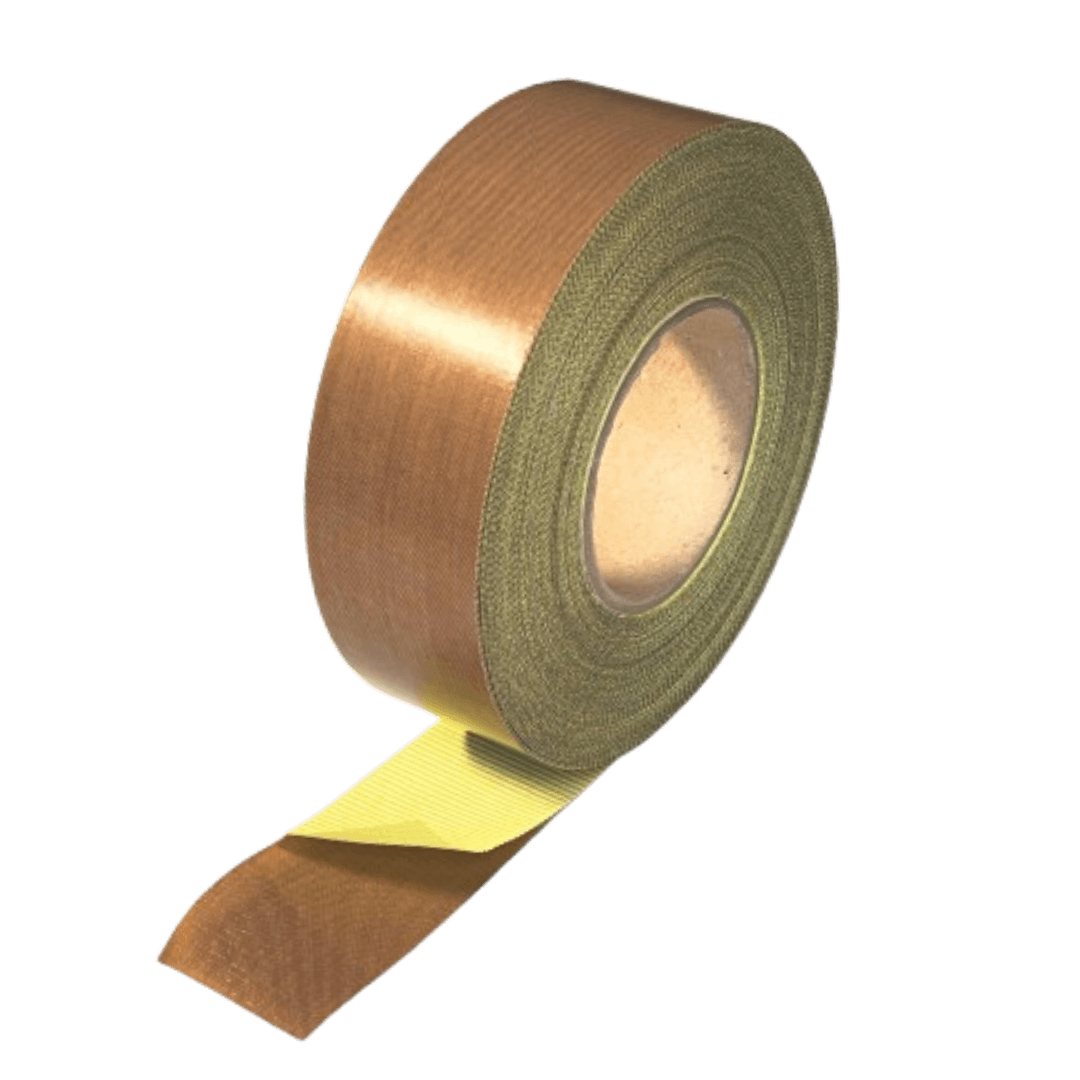
TCG003AD
TCG005AD
TCG010AD
Why Choose Gortef?
Australian Owned
Supplying teflon tapes, sheets and belts to local Australian and New Zealand companies since 1989
Reliable Quality
Industry-leading PTFE tapes, sheets and belts manufactured to the highest standards, trusted by 600+ small to listed Australian companies
Fully Insured
Peace of mind with comprehensive public and product liability insurance coverage
Local Fast Delivery
Local support and FAST delivery to all Australian states